Comparing Milks After Bariatric Surgery: A Nutrient Guide for NZ
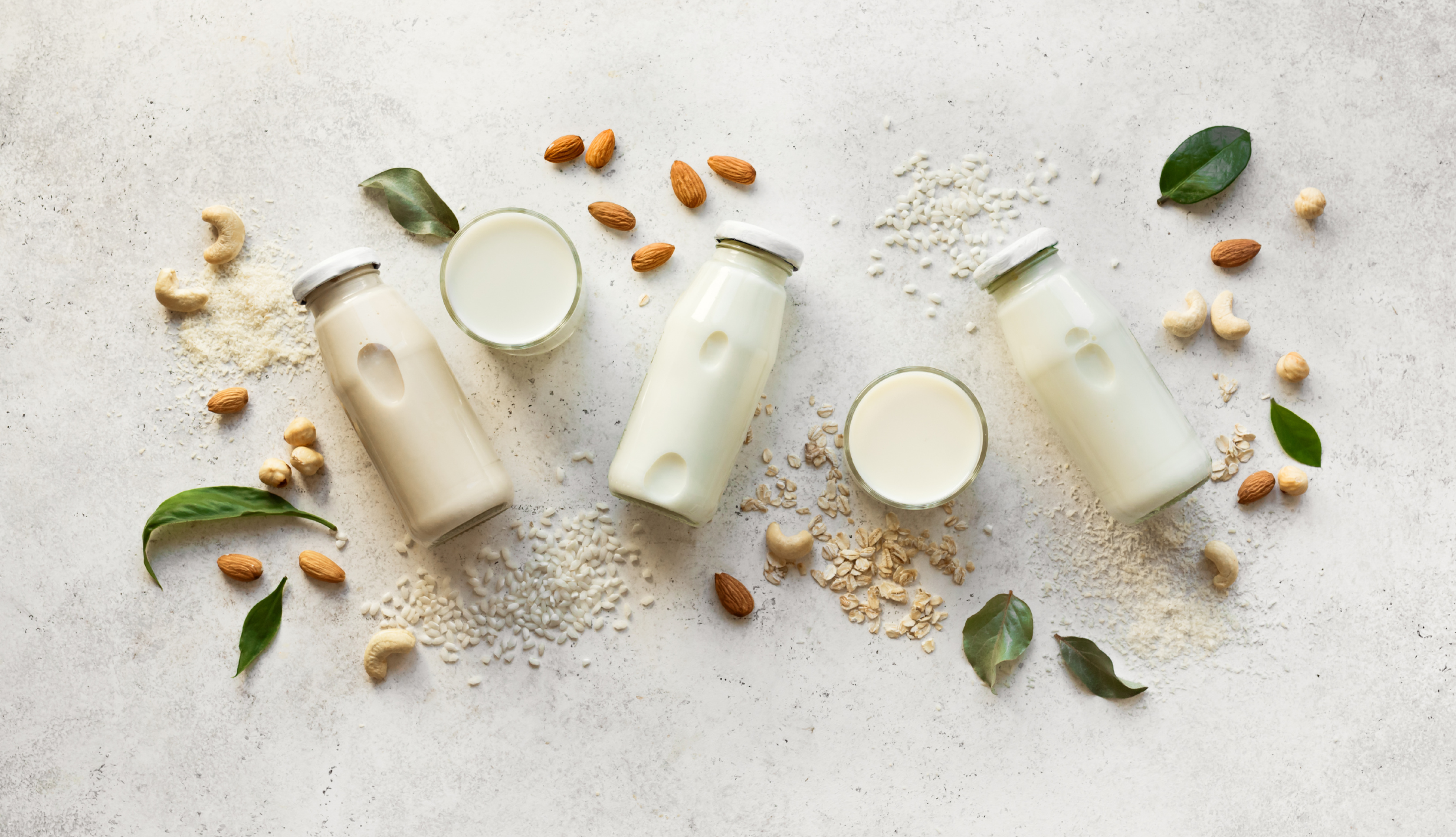
The milk aisle has grown enormously in recent years. Alongside standard dairy, there is soy, almond, oat, coconut, rice and various blends. The nutrition panels of different milks can vary considerably, with some being a helpful source of protein and others containing virtually none.
We're commonly asked what milk options are well suited after bariatric surgery. So if you have stood in front of all the different varieties wondering which one is the sensible pick, this guide compares the protein, fat, calcium and calorie content of common New Zealand milk options so you can easily see the differences.
Why Protein Is the Priority After Surgery
After bariatric surgery, protein tends to sit at the top of the priority list. It supports the maintenance of muscle during rapid weight loss, and most people are working hard to reach their daily target. The challenge is that with far smaller portions, it can be difficult to get enough protein from food alone. This is where (some) milk-containing drinks and protein supplements may offer a helping hand.
Comparing Common New Zealand Milks
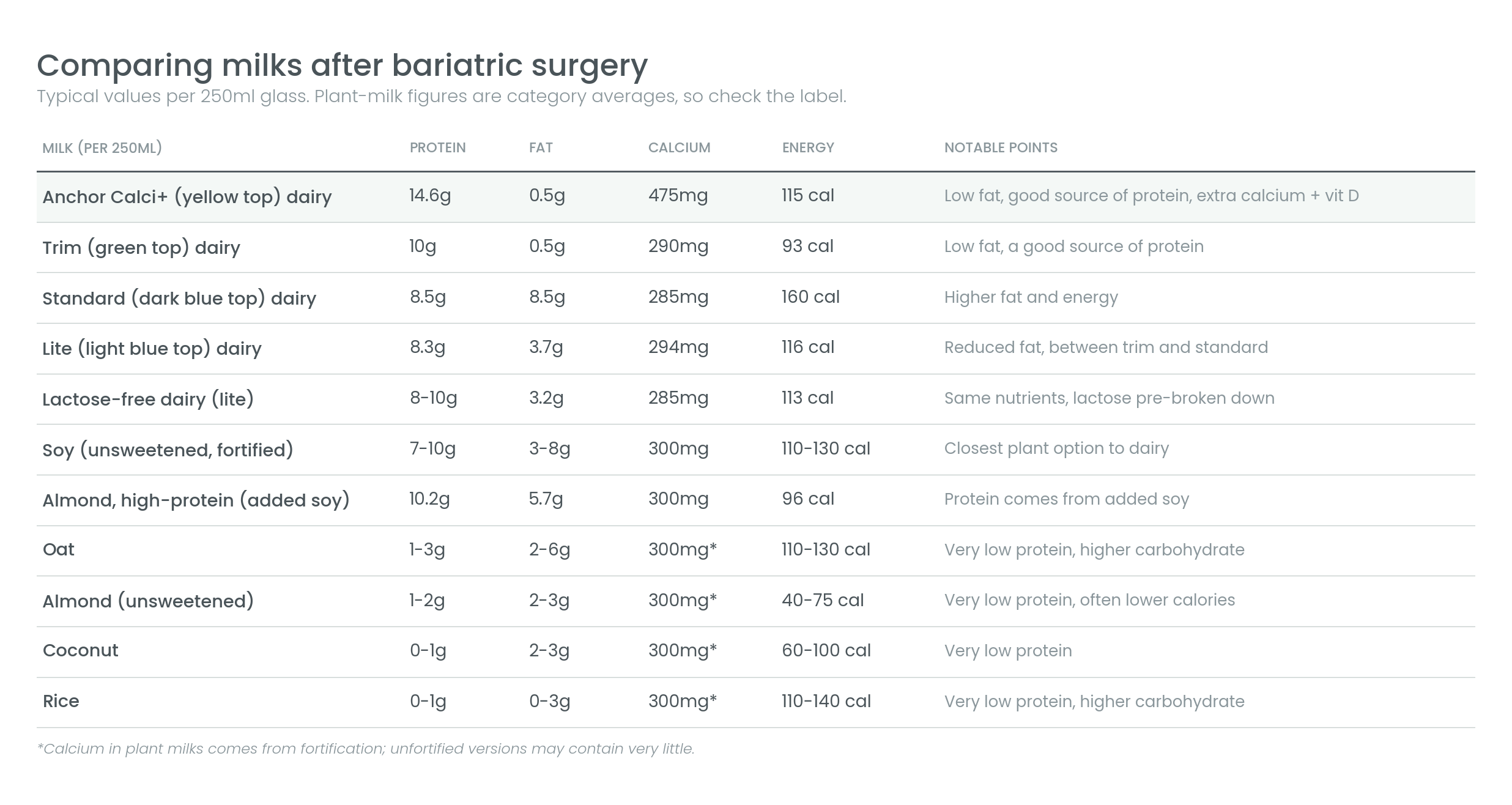
The table below compares typical values per 250ml glass (one standard cup) of various dairy vs non-dairy milk options. Plant-based figures are category averages and can vary between brands, so it is always worth checking the label. Choose unsweetened, calcium-fortified versions of plant milks where you can.
What the Numbers Show
Dairy leads on protein. A glass of trim or Calci+ trim milk delivers roughly eight to fifteen times the protein of almond, oat, coconut or rice milk. For protein in one glass, dairy is hard to beat, and a calcium-enriched option like Anchor Calci+ offers the most protein and calcium per serve for the fewest calories.
Fortified soy is the closest plant match. If you avoid dairy by choice or necessity, unsweetened fortified soy has the highest protein content of all the standard plant-based milks.
"High-protein" almond milk is actually also from soy. Some almond milks reach around 10g protein per 250ml glass, but the protein comes from added soy rather than the almonds, so it is worth checking the ingredients if you avoid soy.
Variations in fat content. Trim and calci-trim dairy contain less than a gram of fat per glass, standard (dark blue top) is much higher, and plant milks often fall somewhere in between.
Calcium in plant milks depends on fortification. Dairy contains calcium naturally, while an unfortified plant-based milk may offer very little, so check the label.
A note about sugar. Dairy's sugar content is often higher because of lactose, a naturally occurring milk sugar rather than added sugar. Check the ingredient list for added sugar rather than the sugar figure alone, as some plant-based milks are sweetened with added sugar.
If lactose causes bloating or discomfort, lactose-free dairy keeps the protein and calcium while removing the lactose, so this could be an option to consider.
Summary
When portions are small, milk can be a helpful way to top up protein - depending on which option you choose. Dairy comes out ahead, and a calcium-enriched low-fat option like Anchor Calci+ offers the highest protein per serve. Among plant-based milks, soy is the closest match for protein, or a high-protein almond (due to the added soy).
Protein Top Up
Whether you're lactose intolerant, prefer the taste of plant-based milks, or are simply looking for another way to help reach your protein goals, a protein supplement may be an easy addition. Tric Nutrition's Protein+ Whey Protein Isolate mixes easily into milk or water and provides a complete protein source per serve, which may support your protein intake when appetite is reduced. Tric collagen options are another way to add protein to your day if you're looking for a dairy-free or lighter alternative. If you would like help working out what suits your post-op stage and tolerance, speak to your bariatric nutritionist.
Disclaimer: This article is general information and isn't a substitute for personalised advice. Your needs will depend on your individual circumstances and stage - a registered nutritionist or your bariatric team can tailor this to you. Tric Nutrition and Tailor Clinics are part of the same group. Figures for milk comparisons are drawn from current labels at the time of publication and may change if a product is reformulated.