
Introducing the Bari-IQ Method: An Online Course for Life After Bariatric Surgery
For many people, the initial weight loss phase after bariatric surgery brings a noticeable break from food noise. Beyond that point, a different set of challenges tend to arise - hunger may start to feel stronger again, grazing may have crept back in, and the approaches that worked in the past may not work quite as well as time goes on.
If this sounds familiar, it doesn’t mean that you’ve done anything wrong or that the surgery has failed. Learning to navigate the return of hunger and cravings is a normal part of the bariatric journey. It is also the reason we developed the Bari-IQ Method, an online course for people at least one year post-op who want to understand what is driving their hunger, cravings and food noise, and how to respond to it.
Why a Course for Life Beyond Year One
The first year after surgery is quite structured, with regular reviews, clear eating stages and gradually expanding portion sizes. Beyond that point, appointments usually become less frequent, and the challenges people describe tend to shift from what to eat towards why they are eating.
The return of hunger after bariatric surgery is normal and expected. What many people find harder is what can come with it: louder thoughts about food, grazing between meals, reaching for food when stressed or tired, and frustration when stricter rules do not last. Knowing what to do and being able to do it consistently are two different things, and the Bari-IQ Method was built to help close that gap.
What Is the Bari-IQ Method?
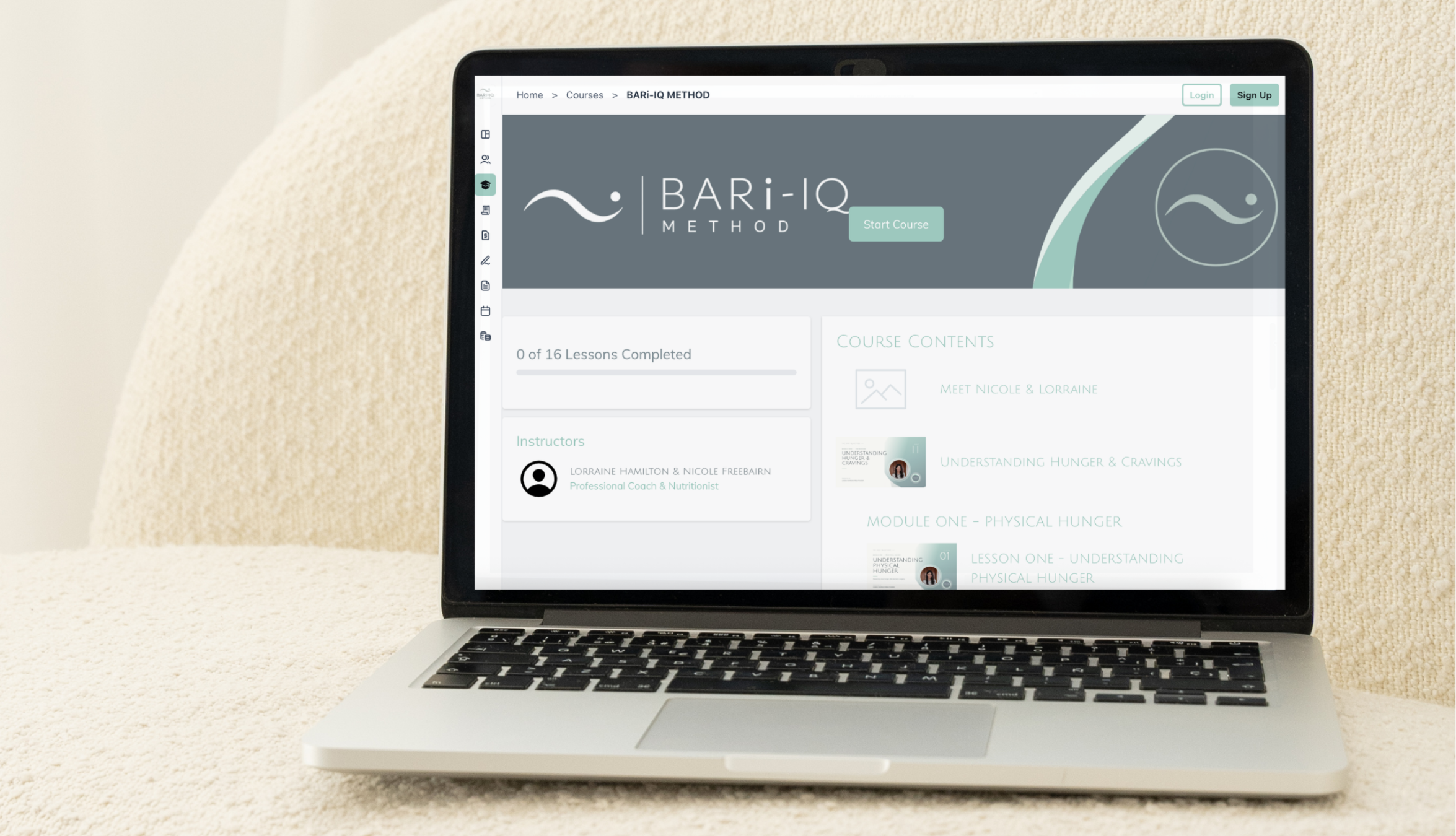
The Bari-IQ Method is a self-paced online course created and presented by Registered Nutritionist Nicole Freebairn and Professional Coach Lorraine Hamilton, and developed with Tailor Clinics.
It is built on one central idea: hunger rarely has a single origin. Eating is shaped by physical needs, emotions, habits and environment. The course brings nutrition and mindset together, with the aim of helping you recognise what is going on in the moment and respond to that, rather than meeting every urge to eat in the same way. It builds on principles used at the Bari-IQ retreats alongside bariatric nutrition science, adapted into short online lessons that can be accessed from the comfort of your own home, your break at work, or even your morning walk.
What the Course Covers
The course is organised into four modules. Each includes short video lessons with written resources and clear action steps.
Introduction - the difference between hunger and cravings, and an introduction into five hunger types and what each may be telling you.
Physical drivers - noticing early hunger cues before they escalate, using a hunger-fullness scale, and building balanced meals with enough protein and fibre.
Habitual drivers - recognising the routines, environments and patterns that shape eating, and learning how to rebuild your habits to support the life you want to live.
Emotional drivers - recognising emotional hunger, understanding how emotions show up in the body and may influence cravings, and building ways to respond to feelings without food.
How It Works
Lessons run for around 5-15 minutes and are fully self-paced, so they can fit around work, family and everything else. Alongside the videos are worksheets, reflection prompts and tools to support you to integrate the action points into your life.
There are no rigid food rules or avoidance lists. The focus is on noticing patterns and building skills, rather than following another set of rules.
Is It the Right Fit for You?
The Bari-IQ Method may suit you if you:
Had bariatric surgery at least 12 months ago, or are past the initial weight loss phase
Are noticing hunger, cravings, food noise or grazing that feels harder to manage
Want to be more compassionate with yourself rather than feel ashamed
Are ready to build a more sustainable routine with food
It may not be the right fit if you are still in the initial weight loss phase, as your needs at that stage are different and are best discussed with your clinical team. It is also not designed for anyone seeking acute medical or mental health care, or support for an eating disorder.
Questions We Are Often Asked
Do I need to have had surgery with Tailor Clinics? No. The course is open to anyone who has had bariatric surgery, whether with Tailor Clinics or another provider, in New Zealand or overseas.
Does it matter which surgery I had? No. The content is relevant across the sleeve, bypass and other bariatric procedures.
I am using a GLP-1 medication. Is it still relevant? Yes. Understanding your hunger types and eating drivers is relevant whether or not you are on medication. Questions about the medication itself are best directed to your prescriber.
Meet Your Instructors
Nicole Freebairn is a Registered Nutritionist (NSNZ) and Senior Nutritionist at Tailor Clinics, with over five years' experience in bariatric and obesity medicine care. She leads the physical and nutritional side of the course - what is happening in your body, and how the way you eat may support normal hunger and fullness signals.
Lorraine Hamilton is a Professional Coach and Mindset and Behaviour Change Facilitator with over 20 years of coaching experience. She leads the emotional and behavioural side of the course, focusing on understanding your patterns and changing how you respond to them.
As Tailor Clinics Director Andrea puts it, there is "a whole part of the journey that happens in your head." The course was built to give that part of the journey the same attention as the physical side.
Explore the Bari-IQ Method
If hunger and food noise are taking up more headspace than you would like, the Bari-IQ Method offers a practical way to understand what is driving your eating and build skills to respond to it.
Enrolments are now open. Find out more about the Bari-IQ Method
Launch pricing is available for those who enrol before the end of October 2026.
This article is general information only and is not a substitute for individual medical, nutrition or psychological advice. Individual experiences vary. Please talk to your healthcare team before making changes to your eating, medications or treatment plan.